

Fear
Signals Risk & Calls for Care in Design
Fear can emerge when there’s something meaningful on the line—our reputation, a relationship, a resource, or a deeply held belief. In design work, fear often arises when a new approach or recommendation asks people to shift how they work, think, or lead. It can show up quietly as hesitation, or loudly as resistance.
Fear doesn’t mean the work is off track. It often signals that change is happening—and that something important is being asked of us. When fear is named and engaged with care, it can prompt powerful conversations that bring clarity, commitment, and courage into the process.
Throughout the design journey,
Fear might show up in different ways:
Buy-in feels fragile or hard to secure across internal stakeholders.
New methods or roles feel unfamiliar and expose perceived gaps in expertise.
Presenting outcomes feels risky or politically sensitive.
Implementation brings up fear about accountability, sustainability, or ownership.
If you are feeling Afraid, consider:
Getting Specific

Clarify what’s at stake or what outcome you're worried about.
Reframing the Moment
Consider how this fear might signal a meaningful shift—something that challenges the status quo.

Seeking Support
Don’t carry the fear alone—loop in trusted collaborators to help you navigate what’s ahead.

An Example from our Work
Fear signals what’s at stake
We once partnered with an innovation director who was unsure how their CEO would respond to investing in a design-led project. They needed a clear, compelling way to demonstrate the value of human-centered design. We helped prepare them for the meeting with a short, punchy deck—because execs don’t have much time! The slides connected HCD directly to the company’s mission and strategy, making it clear how it addressed their internal priorities. By the end of the presentation, the CEO was not only convinced but excited to integrate HCD into their future strategy. By reframing the story to meet the audience where they were, we helped shift fear into confidence—and turned a potential blocker into a champion.
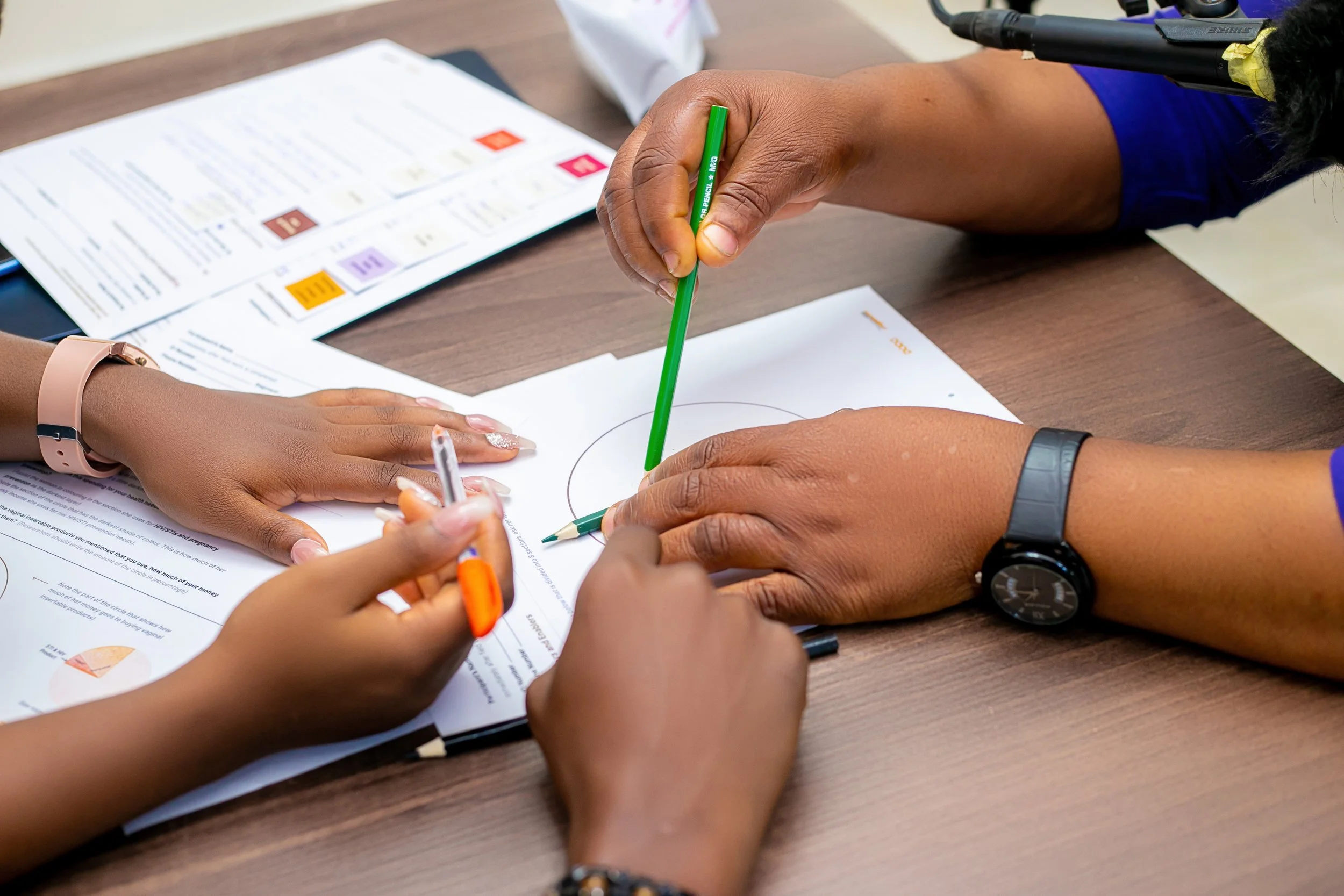
Community members co-create visuals that serve as powerful tools to communicate shifts in narratives and build towards shared understanding between all stakeholders.

Pause & Reflect
What part of this process feels most vulnerable?
What am I trying to protect—and why?
Who can I talk to for perspective or support?
We know that everyone's experience is different.
If your emotions feel overwhelming, uncertain, or simply different from what we've described, we’d love to hear from you.
Reach out to us—we're here to navigate them together!