COMMUNITY PANELS FOR GLOBAL HEALTH
Gender Equality Design Labs
Client: Gates Foundation
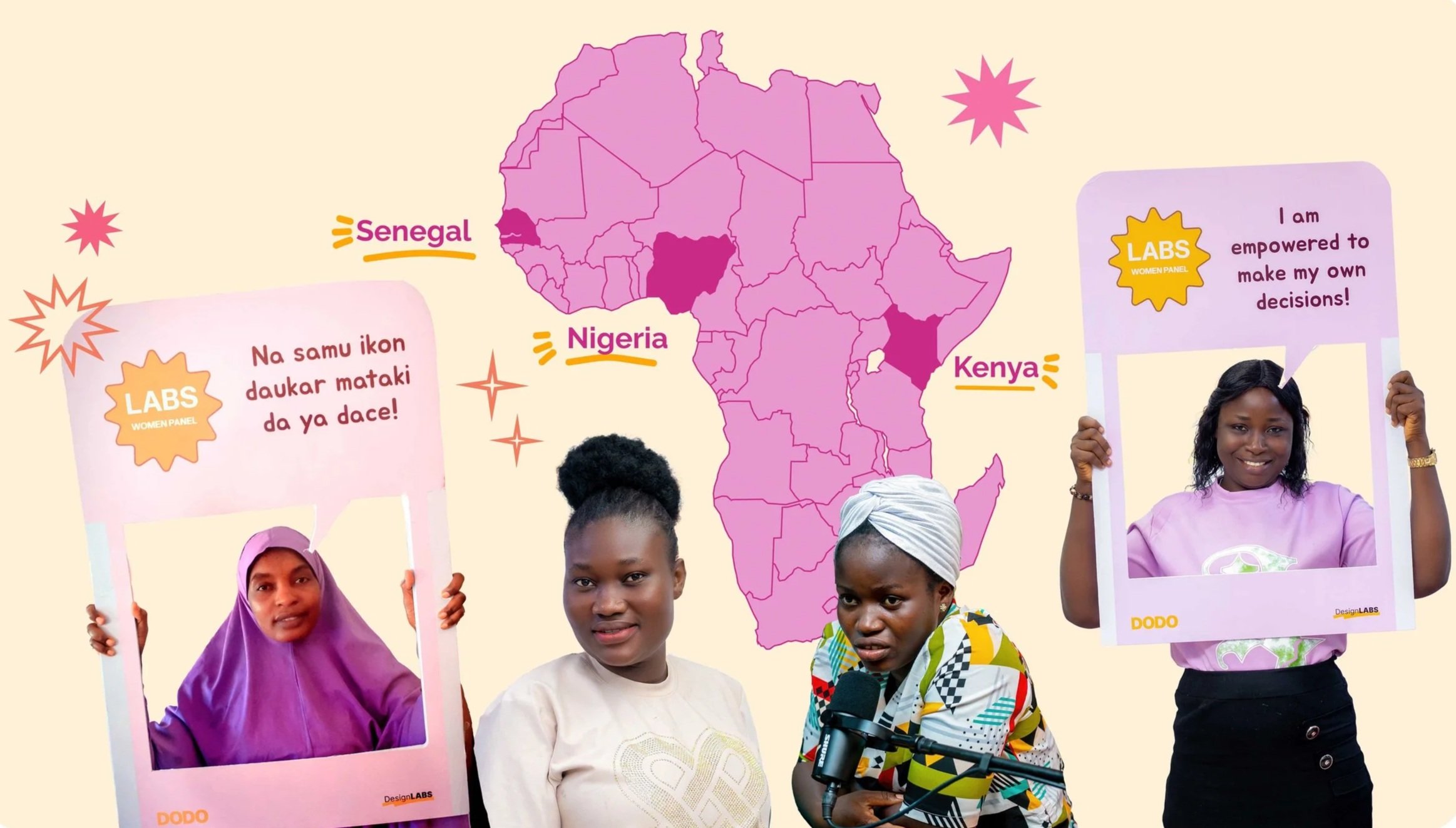
Location: Kenya, Nigeria, Senegal
Local Design Partners: CcHub, Derz Consulting, DODO Design and YUX Design
Tech Partners: Dots, Paukwa House and Kiran Joan
Challenge
Too often, health innovations are designed far from the communities they are intended to serve. While the science may be groundbreaking, the people who will ultimately use these innovations are often involved too late in the process, if at all. As a result, products, services, and programs can overlook local cultures, priorities, values, and everyday realities. This is especially true in women's sexual and reproductive health, where understanding women's lived experiences is essential to designing products that are safe, effective, and meaningful.
To help address this challenge, Catapult Design partnered with the Gates Foundation's Gender Equality Data & Insights team to explore how women could play a more active role in shaping the future of reproductive health innovations. Focusing on vaginal insertable products in Kenya, Nigeria, and Senegal, the project sought to bring women's perspectives into the earliest stages of research and development.
Together, we designed the Gender Equality Labs—a participatory approach that embeds community voices and lived experience throughout the innovation process. The Labs help identify unmet needs, challenge assumptions, uncover new opportunities, and generate actionable insights that inform future reproductive health innovations.
Process
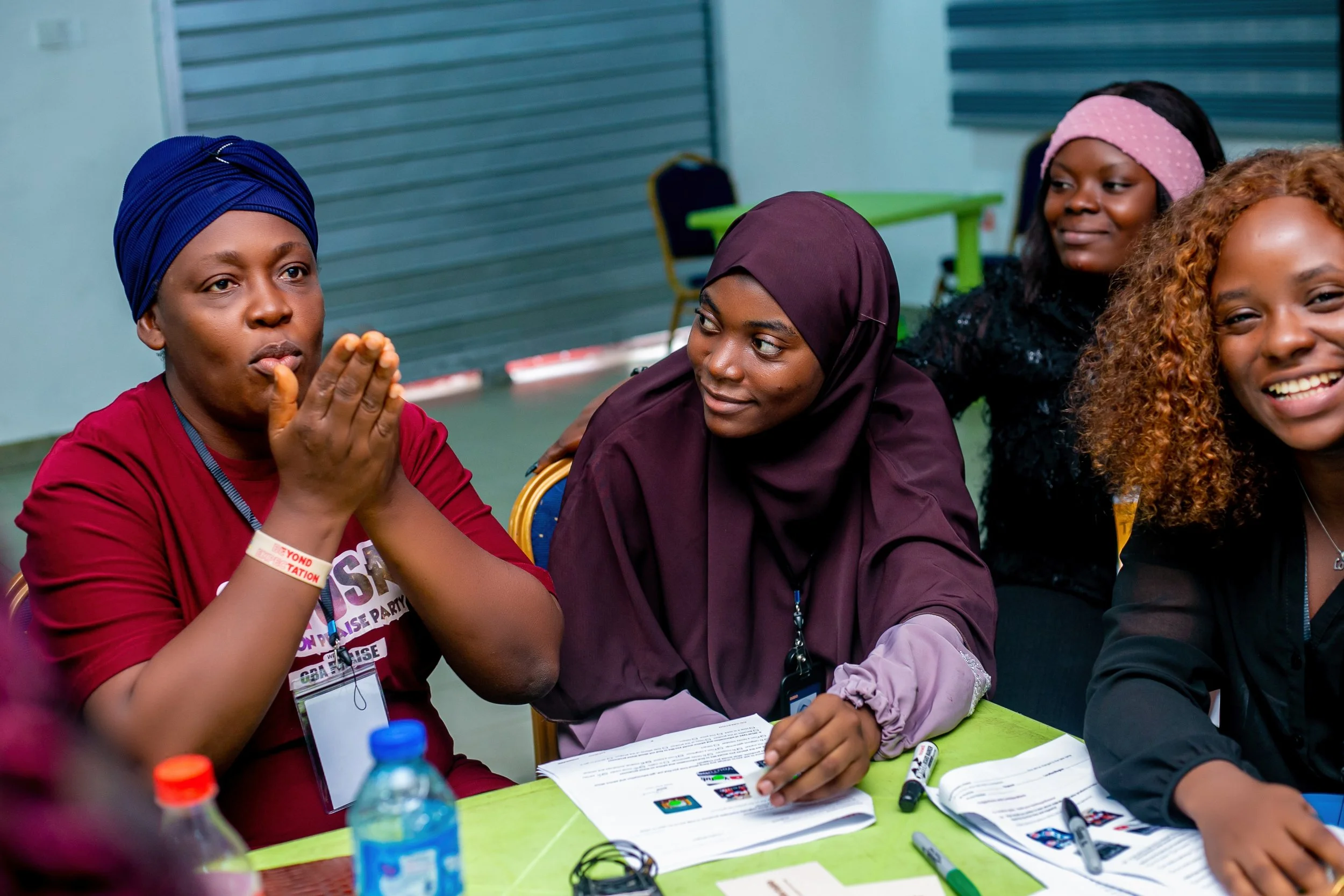
For this participatory research process, we built long-term relationships with panels groups of women across Nigeria, Senegal and Kenya who served as key advisors throughout the research. Through interviews, focus groups, co-creation sessions, and repeated conversations over time, we facilitated a process centered around women’s experiences - to understand their needs, challenges and aspirations regarding reproductive health methods and medical devices. Through the process, we developed our research questions and hypotheses, and anchored the research on the participatory panels and conversations to test assumptions, validate findings, and refine the work iteratively to better serve the participants’ needs. To keep the research culturally grounded and methodologically rigorous, we coordinated a network of local embedded design partners—DODO Design, YUX Design, Derz Consulting, and CcHub—who facilitated our panels and research activities, alongside supporting tech partners in each country.
We developed a series of Hypotheses were developed through a facilitated kick-off workshop with the Gates Foundation's Gender & Equality Data & Insights (GE Division) team that resulted in two key questions:
How information, support, and counseling shape women's adoption of vaginal insertable products; and
Whether a product bundling family planning with HIV/STI prevention outperforms standalone options.
Panels of five to six women were then recruited from specific Pathways vulnerability segments according to our previous research project, Pathways, with the corresponding IRB clearance and informed consent in place before any interviews or focus groups.
Deliverables
Agreed-upon research hypotheses
Research and recruitment plan
Getting on the same page
ALIGN PHASE
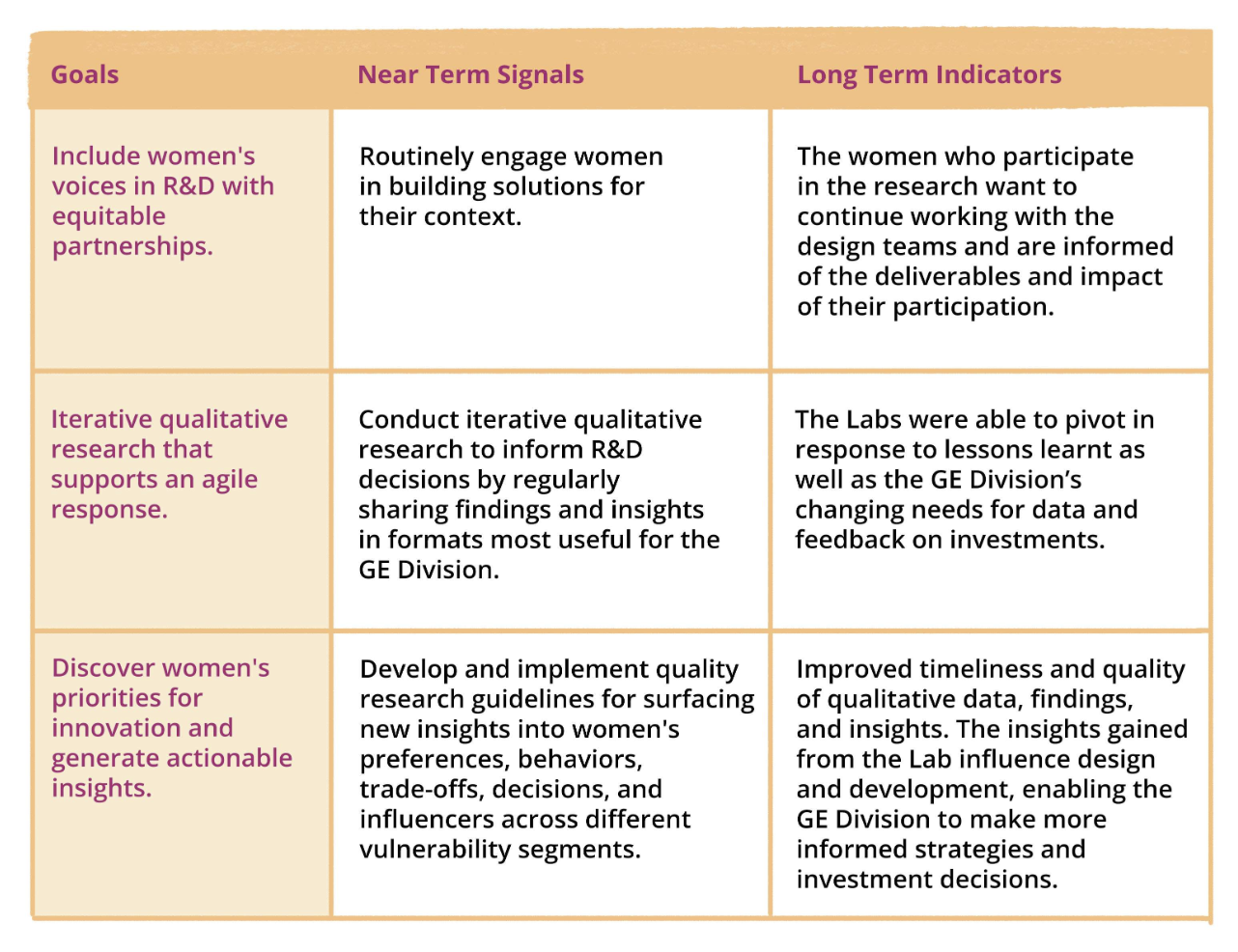
Metrics for success for the Design Labs defined during the Kick-off Workshop.
ENGAGE PHASE
Research with the community
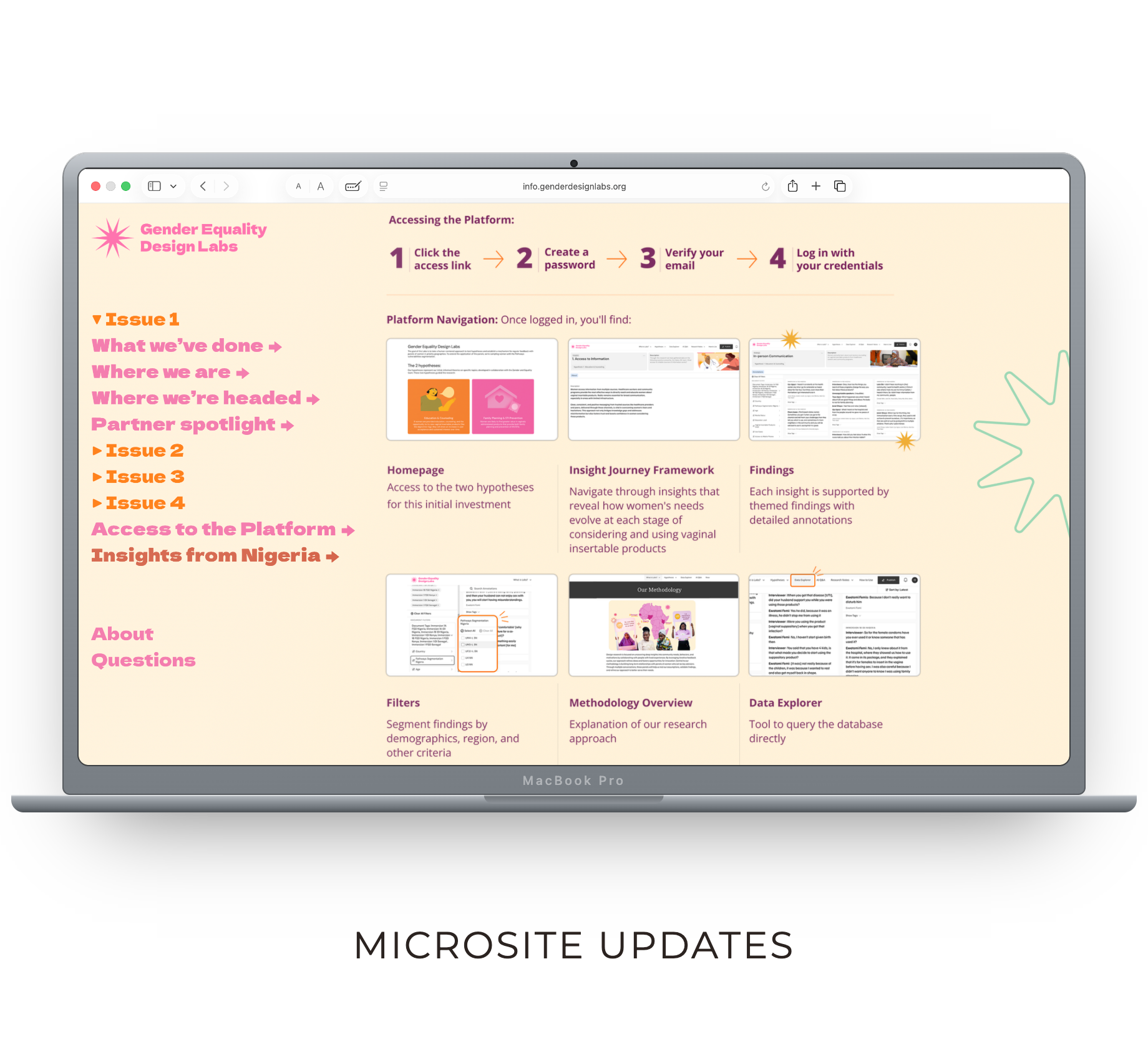
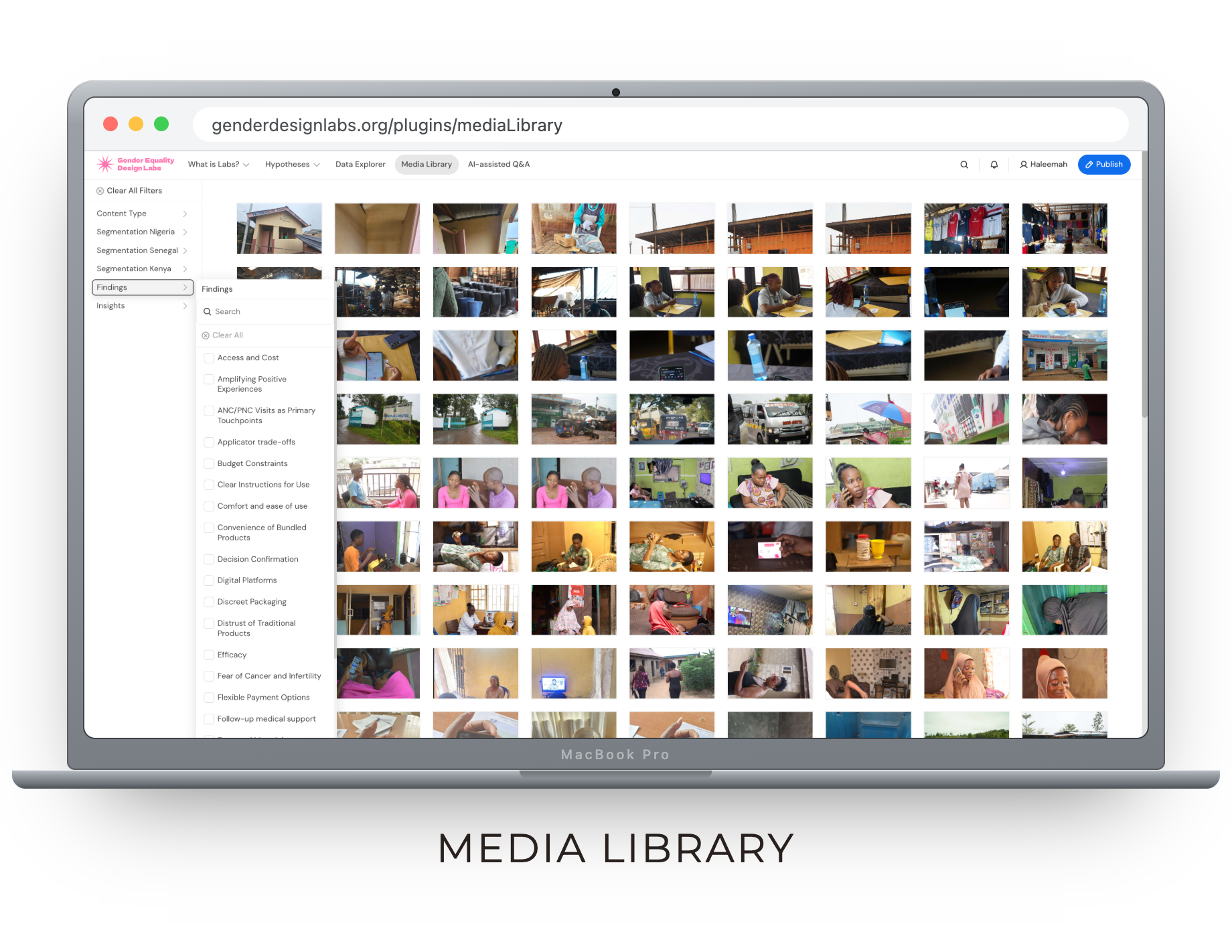
Across the three countries, 114 women were engaged in research activities over time rather than in a single sitting, with WhatsApp groups keeping the dialogue open between sessions. Every engagement was recorded, translated, and uploaded to a shared data platform, where researchers tagged it alongside a media library built from in-context observations. A project newsletter and microsite kept the client informed as the work progressed.
Deliverables
Individual interviews, focus groups, and co-creation exercises
WhatsApp panels for continued engagement
Labs Data Platform (transcripts translated and tagged)
Media library from in-context observations
Project newsletter and microsite
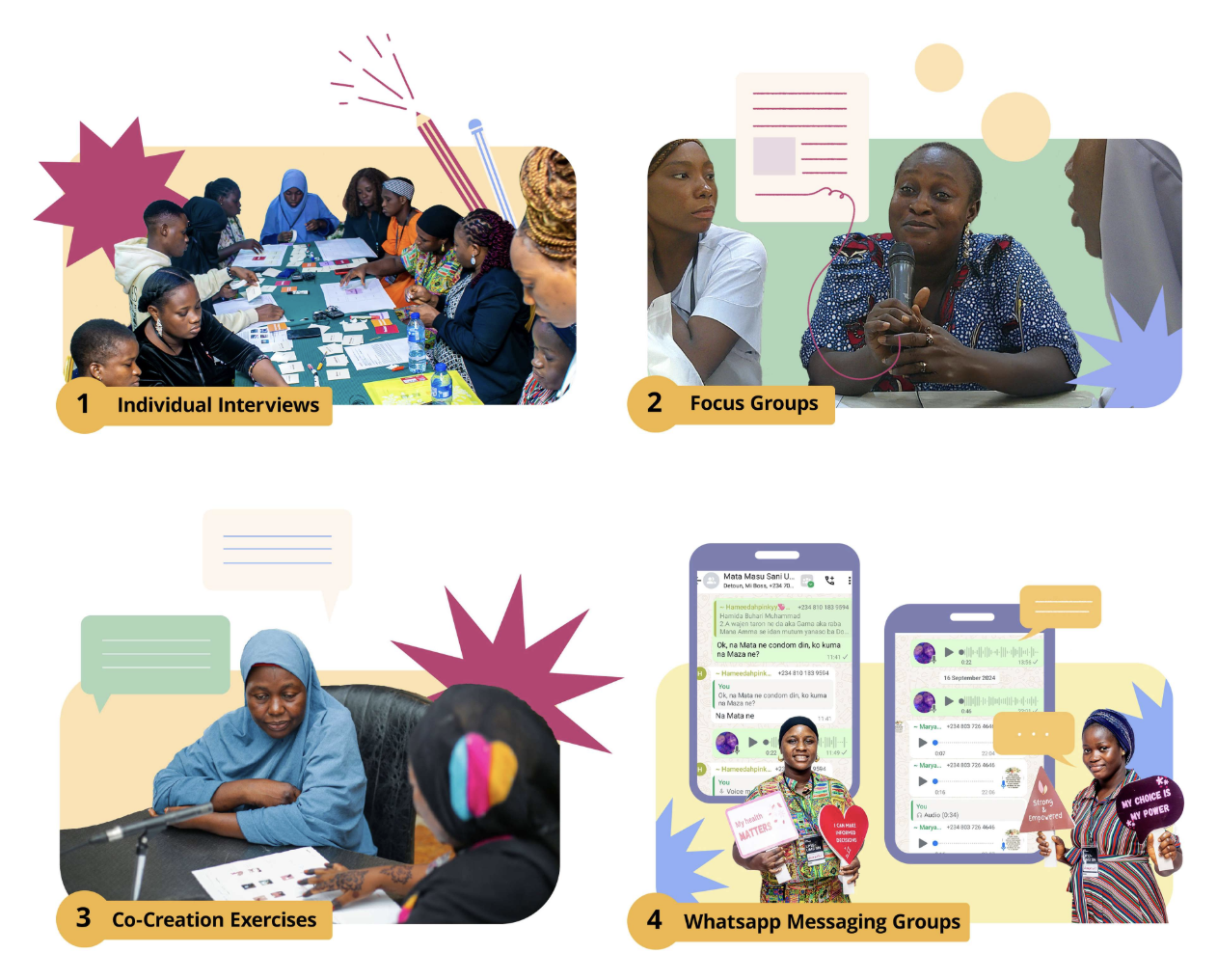
Each panel moved through the methods in this order so each one could be facilitated based on findings surfaced by the last one.
114 women participated in the Design Labs activities 2+ times over 9 months
228
IN-DEPTH INTERVIEWS
17
WHATSAPP
GROUPS
FOCUS
GROUPS
34
REGIONS ACROSS KENYA, NIGERIA
AND SENEGAL
13
LANGUAGES USED TO FACILITATE RESEARCH
6
SHARE PHASE
Carry the insights outward
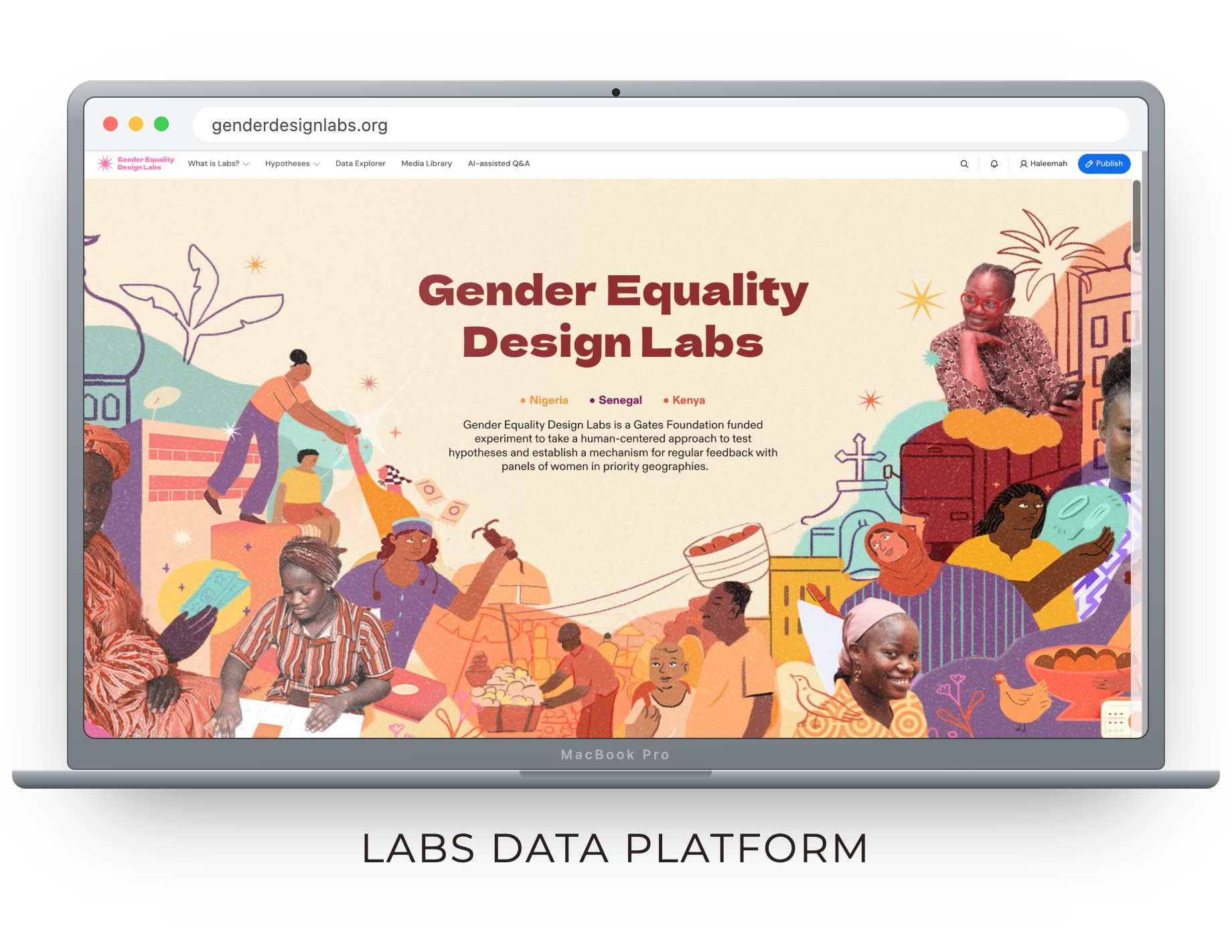
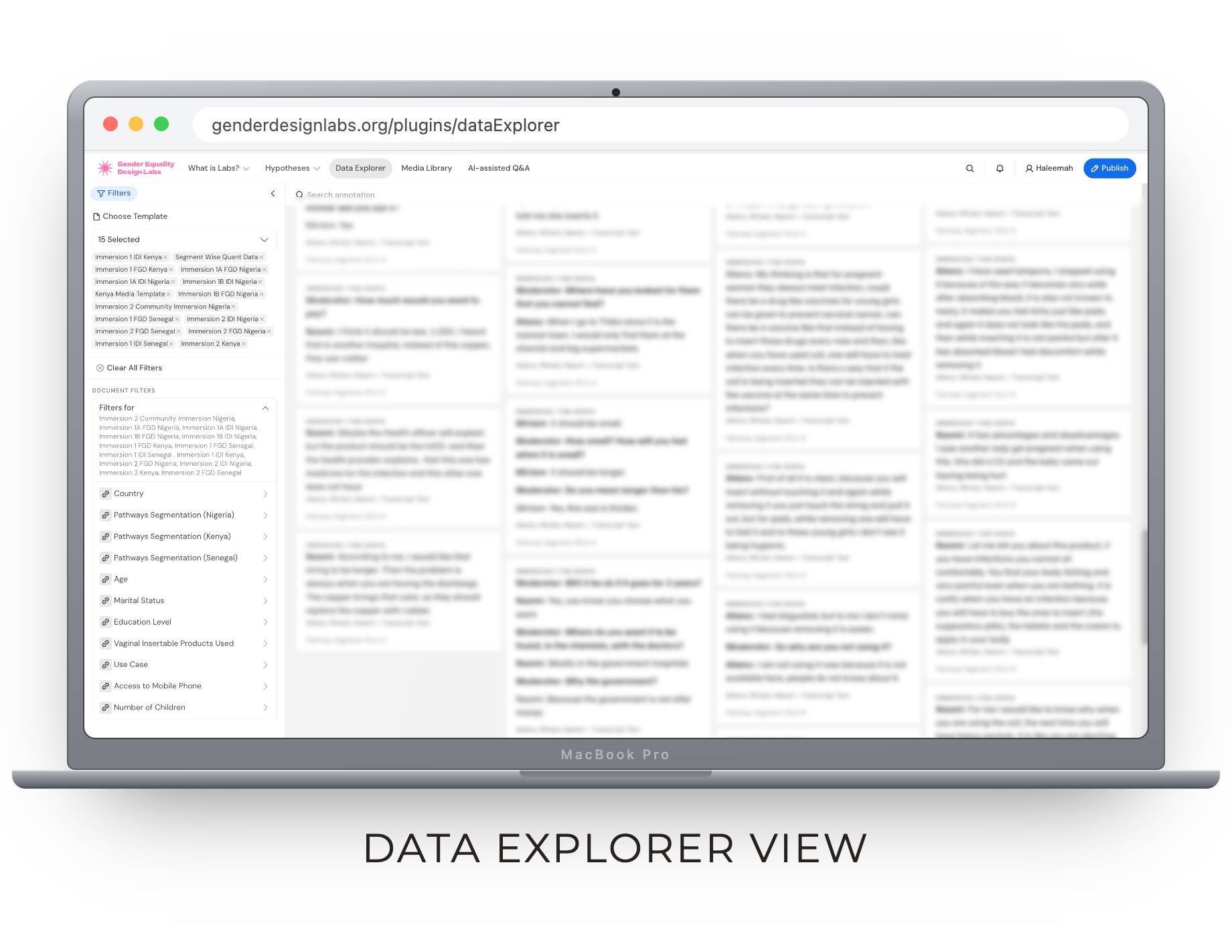
Synthesis carried the work from raw data to findings to insights — from the objective "what" to the underlying "why" — surfacing practical opportunity areas along the way. Outputs lived on the Labs Data Platform, where stakeholders could access organized mixed-method analysis and topic-queryable insights alongside raw interview data, enriched with audiovisual storytelling.
Deliverables
Labs Data Platform (organized quantitative + qualitative analysis, topic-queryable insights)
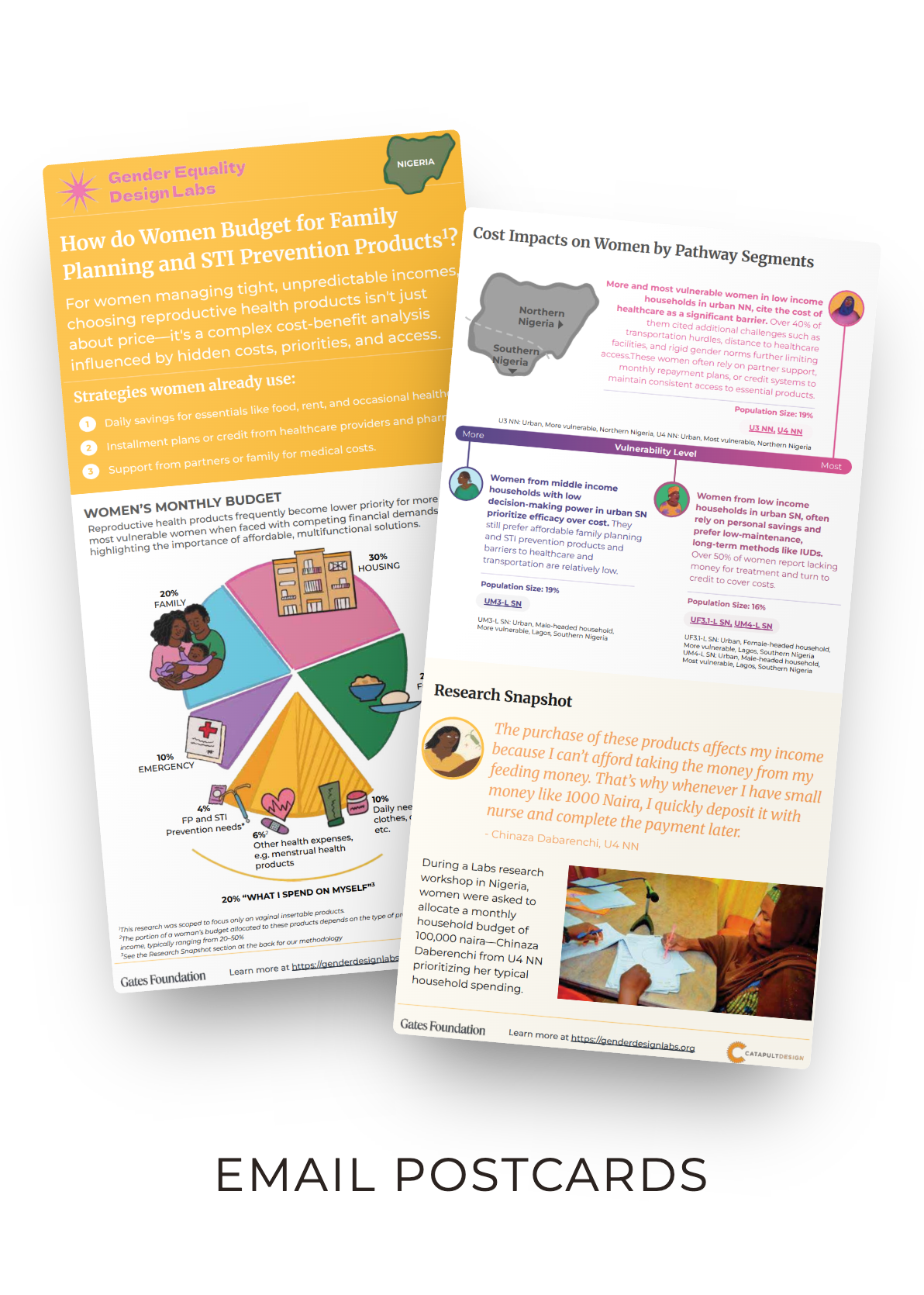
Email postcards
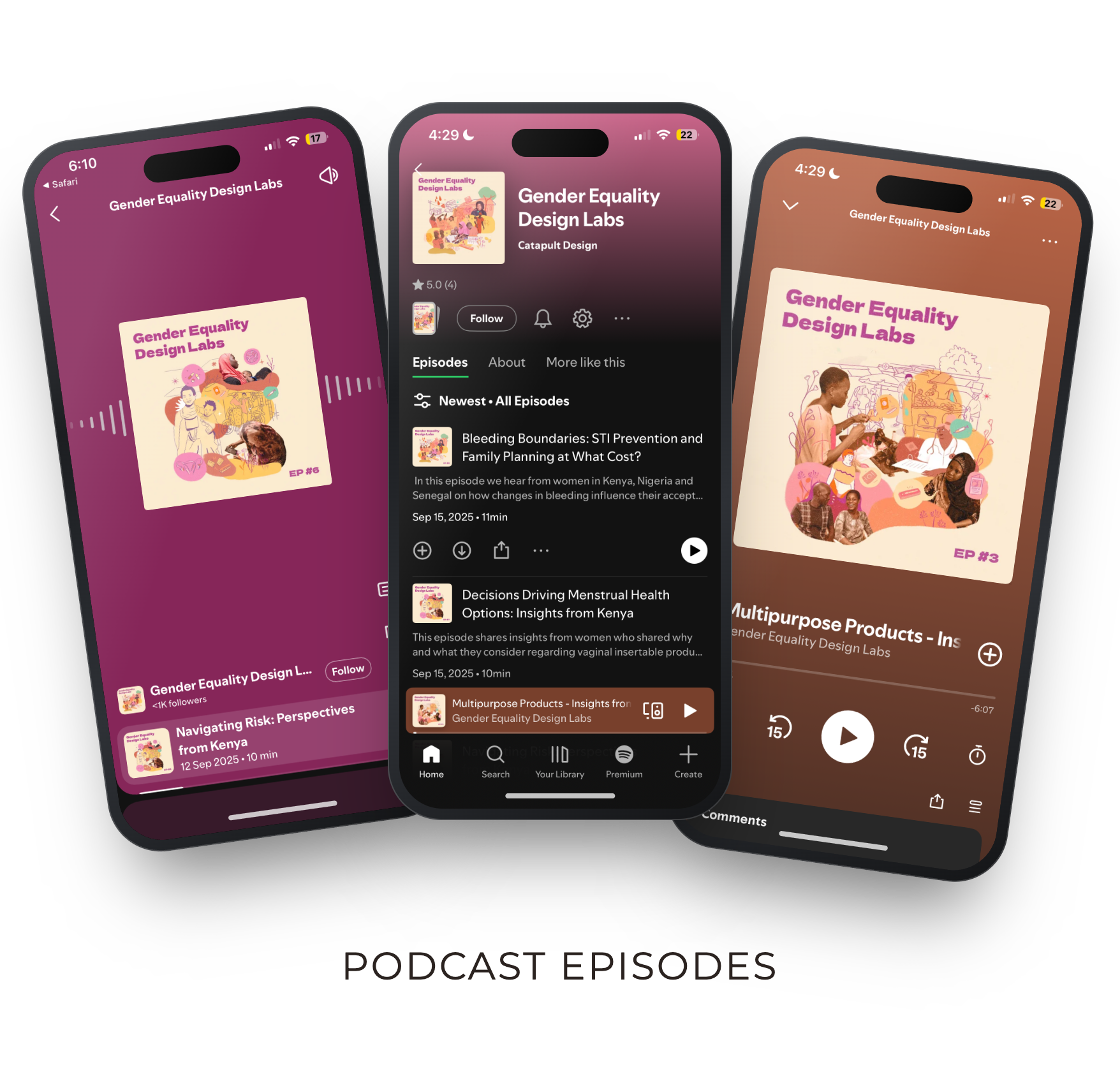
Short podcast episodes
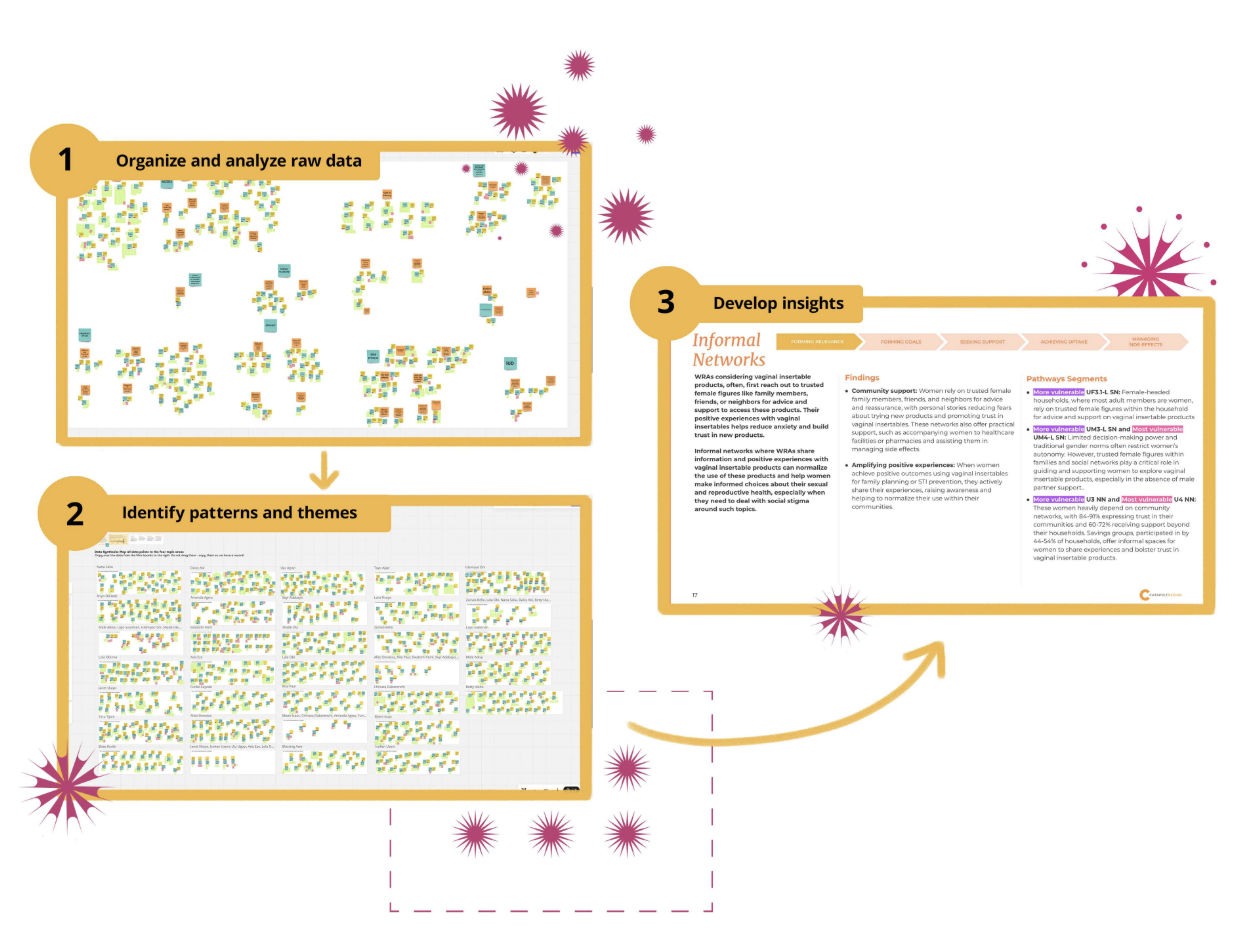
Our synthesis process transforms data collected from immersions into actionable insights through a mixed method synthesis process.
COMMUNICATING THE INSIGHTS
Outcomes
The pilot's data was used across teams at the Gates Foundation to:
Write value propositions for products;
Understand how women perceive bleeding, including heavy menstrual bleeding, and how it shapes their choice of insertable product;
Verify hypotheses before major investment, as when an internal AI task force examined how women use digital channels in northern and southern Nigeria; and
Map existing contraceptive products against women's needs, clarifying which meet the needs of women of reproductive age and where added investment could raise uptake.
The design panels were built to continue, with future research priorities shaped alongside donors, governments, and private-sector partners.